
As I have mentioned many times before, I could not be happier with the results of the 48th Pennsylvania Monument restoration project. From the very start, I have been both proud and humbled by the support given and pleased by the generous contributions that arrived from all parts of the country. The Rededication Ceremony, held on Saturday, May 29, could not have gone any better. The weather was perfect and the turn-out was outstanding. All in all, it was a very good day. Below are various photographs taken at the event by several attendees, including my colleagues Rangers Mannie Gentile and Brian Baracz.
I am hoping to soon have a video of the event posted, so stay tuned.
* * * * * * * * * * * * * * * * * * * * * *
 1904 Photograph of the Dedication of the 48th PA Monument at Antietam
 Civil War Historian Tom Clemens, an expert on the Maryland Campaign, exchanges handshakes with Artist Mike Kraus
  A large crowd of about seventy turned out to attend the rededication. It commenced with an invocation delivered by Reverend John Schildt, a lifelong student of the Maryland Campaign.
 Antietam Battlefield Superintendent Presents Artist/Scultor Mike Kraus with a National Park Service Arrowhead in Recognition of his fine work and artistry in sculpting the replacement sword.
 I Delivered The Dedication Address while Antietam Park Volunteer and Civil War Living Historian Dave Maher Kept Old Glory Flying
 The Unveiling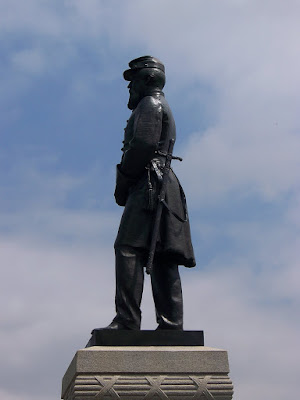
The Sword Returned/The Monument Restored


